
Priesthood and Disability in the OT
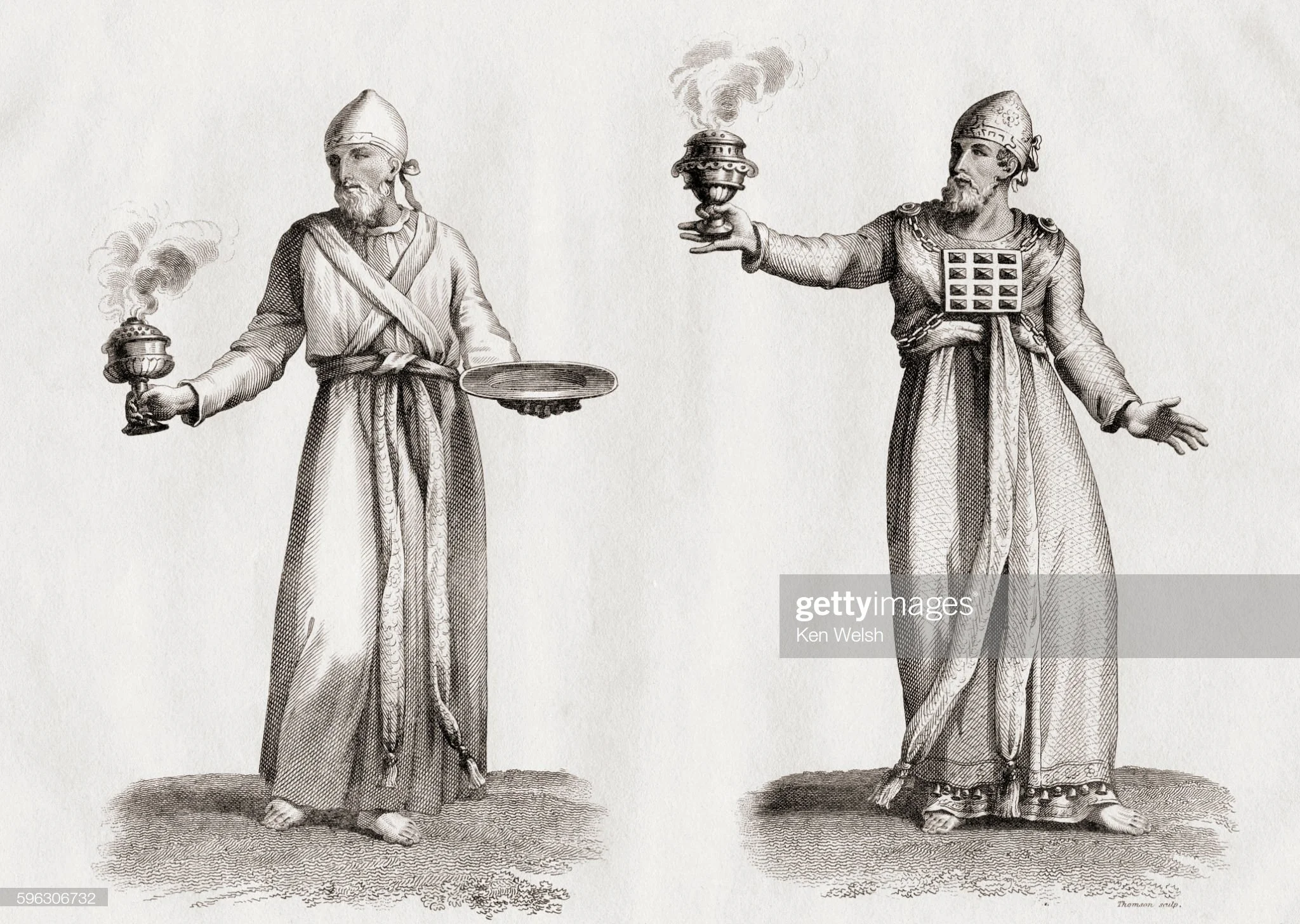

This is the first contribution to the new series, "Everyday Ecumenism." This collaborative project will be a compilation of contributions from women and men seeking to engage theology from an ecumenical perspective for the benefit of the Church.
Thetopic of disability has recently opened itself in Biblical scholarship andtheological studies. The conversation stems from a larger societal movementconcerning both the personhood of the disabled and their role in society. Sincethe topic is fairly new, however, the reach of scholarship has just begun tobring the discussion into the ethical dialogues. In the world at large, ethicaltreatment and consideration of the disabled is lacking. The United Statessuffers from underfunded and understaffed care facilities, largely run onunethical and questionable models of caregiving. In the United Kingdomparliamentary debates rage in regard to Down’s Syndrome, which has almost been“eradicated.”[1]Thus, the caregiving quality and personal value of those with disabilities is aneeded dialogue.
The alternative to maltreatment anddevaluing of the disabled is primarily the Church. In particular, such societalprotections and values of the disabled necessary for an alternative stem fromthe Old Testament’s specific stipulations of the priesthood (Leviticus21:16-24). The Levitical priestly considerations not only provide a contrastingvalue for the disabled from that of surrounding societies in the ANE, but alsoprovide a framework for how the modern church can integrate and care for thedisabled today. By exploring these priesthood laws of disability, newperspectives on religious treatment of the disabled and integration shouldbecome clear.
ANALYSISOF DISABILITY IN LEVITICUS 21
One of the more difficult andperplexing passages of the Old Testament in the conversation of disability isLeviticus 21:16-24. The entire chapter is dedicated to the regulations ofpriestly duty and holiness. Derek Tidball clarifies the priestly role andholiness by explaining, “one of the major responsibilities of the priests wasto distinguish between these categories [holy, clean, etc.].”[2]Holiness indicated the consecration of an object or person, while cleanlinessseems primarily concerned with the state of things.[3]The exclusions found in the text include regulations about where priests can go(v.12), who they can marry (v.7), and general hygiene rules (v.5). Verses 16-24contain the only exclusion of a people group, those with disabilities such asblindness, lameness, deformities of limbs, and other defects, from preformingofferings and entering the holiest place. For the modern reader theseregulations seem discriminatory.
Some scholars consign theseseemingly discriminatory regulations to the idea of holiness: that thedisabilities were simply seen as unholy. Tidball argues that “like thesacrificial victim itself, only perfection could be brought so close to thepresence of a perfect God.”[4]However, there seem to be fundamental flaws in Tidball’s placing the lack ofholiness on the person with disability. First, Tidball’s reading of the textseems to be limited to a presuppositional ideal image. As Kerry H. Wynn argues,this “normate reading” of ancient Yahwist texts assigns categories and meaningswith modern social norms.[5]Tidball makes an error in assuming that the text’s regulations concerning theprofaning of the sanctuary indicate a lack of holiness altogether in those withdisabilities, and this reasoning ignores the text’s indication otherwise. Thebeginning of the discourse on disability regulations prevents the disabled fromoffering the bread of God (v.17), but it does not disqualify the disabled fromthe priesthood as a whole. As Sarah J. Melcher notes, physical standards arefundamentally different than holiness since “the writers of the Priestly Torah neverrefer to a person as holy unless that person has been consecrated to priestlyservice.”[6]Thus, the exclusion from certain acts within the priestly role does not equateto a lack holiness on the part of the disabled individual.
From what are the disabled beingexcluded? Melcher argues that “the primary intention of Lev. 21:16-24 is toprohibit a priest from officiating in the sacrificial cult…”[7]Melcher rightly acknowledges that the disabled person is not disqualified fromthe priesthood, and that the only major prohibition is the officiating ofofferings. The regulation is not primarily concerned with God’s presence as awhole, but rather the action of offering itself. Neither does this exclusion mean that the disabled individualis ritually impure, as v.22 explains that the priest is able to eat of thepriestly bread. Amos Yong further clarifies that “contemporary disabilityreadings would obviously want to note that this text doesn’t exclude peoplewith disabilities as a whole from their priestly vocation.”[8]
Yong, however, continues by notingthat the main issue becomes the idea of profaning the sanctuary (v.23). Melcheracknowledges that the profaning is “a very serious violation,” because this actputs both the disabled individual and the sacrifice at risk.[9]Tidball argues that these regulations indicate that the body signifies “thetotality of the person.”[10]In this interpretation, the disability becomes a symbolic model for the modernreader to understand spiritual impurities and defects. This approach tothe regulatory texts once again fails to provide an adequate answer for thedisabled reader concerning the exclusive nature of the regulations,perpetuating a stigmatizing view of the disablement and failing to give properroom to the disabled reactions to the text.
Two major interpretative optionsthus present themselves to the modern reader.[11]The first, presented by Yong, is a Christological reading. This interpretationfirst presents the idea of Christ being the perfect High Priest, alleviatingthe restrictions placed on the disabled individuals and indicting “neitherdisabilities nor people who have them.”[12]In order to prevent further stigmatization in this interpretation, Yong arguesthat Christ’s crucifixion fulfills the priestly function with a disabled andwounded body, thus alleviating the disabled reader from alienation.[13]
A second interpretive approach is toallow for the tension of the text and a deconstruction of the stigmatization inthe regulative codes. This approach does not “de-sacralize” the text but ratherinterprets the regulations through the larger paradigm of Leviticus 19:14: “Youshall not curse the deaf or put a stumbling block before the blind, but youshall fear your God, I am the Lord.”[14]Using this passage paradigmatically, one can begin to read the text within thelarger ethical context of Leviticus. A paradigmatic cultural comparison of theLevitical ethics to that of Mesopotamian treatments of disablement allows foran expanded attempt to draw ethical conclusions in the modern context.
MESOPOTAMIANVERSUS LEVITICAL TREATMENTS OF DISABLEMENT
Mesopotamian ethics were rooted inmythological understandings of creation narratives. According to Neal H. Walls,the Mesopotamian creation myth included the idea that humanity’s purpose wasprimarily labor and alleviation of labor from the gods.[15]In said mythologies, sometimes the gods created disabilities in order toprevent the overpopulation of humanity. In Mesopotamian social contexts,families bore most of the responsibility of caring for those with certaindisabilities and were excluded from most temple service.[16]Thus, the value of the disabled was consigned mostly to productivity. The firstdistinction between the Yahwistic regulations and the Mesopotamian practiceslies in the idea of productivity. The Levitical laws seem to centralize carewithin the temple context, as indicated in the role of disabled priests.
It is worth noting how Mesopotamiansocieties remedied disabilities. Walls argues that infanticide and euthanasiawere rare, but still occurred. He provides the first example, from thediagnostic handbook (sakikku) whichdiscusses a certain ailment (considered to be Werdnig-Hoffman Disease)resulting in the family throwing the child alive into a river.[17]Similar texts point to the practice of live burial of infants with similarsyndromes. The second clear distinction between the Yahwistic regulations ondisability and some of the Mesopotamian ethics is the practice (however rare)of infanticide. No such practices are known to have been allowed in theYahwistic stipulations, thus the value of the disabled individual is notconsigned to their productivity.
Hector Avalos, in his analysis ofhealing liturgies in the ANE, explains that the framework for disability waslargely influenced by the contrast between polytheistic and monolatrous drives.The Mesopotamian treatment of disability was largely centered in the home(which valued productivity) in contrast to the temple centrality of theYahwistic practice. Here, Avalos fails to draw from the inclusion seen inLev.21. Rightly, he argues that the temple centrality prevented directtreatment for some of the disabled, but this ignores the larger provision oftemple inclusion.[18]The disabled individual is provided with food (holy food at that), sacredduties in the temple, and societal protection. Edgar Kellenberger notes that“the temples had the greatest economic power” (behind the royal palace of theANE), a dynamic certainly necessary to acknowledge in order to see the importanceof disabled inclusion in these contexts.[19]Though Mesopotamian treatment of the disabled is varied, the Yahwisticinclusion of the disabled into the very priesthood of the temple displays anintegrative model ahead of its time.
DISABLEDPRIESTHOOD AND MODERN ETHICS
The modern conversation surroundingthe place of the disabled in the larger society is not new to the humanexperience. The Yahwistic provision for those who are disabled, regardless ofproductive level is in direct contrast to the Mesopotamian ethic. Driven by theGenesis narrative of creation and the paradigm of Leviticus 19, culticpractices and regulations not only value the disabled with provision (shelter,food, etc.) but secure them socially by enabling disabled Levites to beconsecrated priests. Among these many social provisions is the eating of theshowbread and the direct route to sanctification (v.15), as well as a restoreddignity and level of autonomy seemingly absent from the Mesopotamian ethic.
Dominant within the modern conversation surrounding disability seems to be an exaggerated version of the Mesopotamian ethos, regulating stigma and social position of the disabled to a larger myth of productivity and economic stability. As previously noted, current so-called “eradication” efforts of Down’s Syndrome in Europe are contingent on the idea that abortion will not only ease the suffering of the child but lift the potential economic suffering of the family. Due to the larger bifurcation of the disabled individual between emotional capacity and rational, social provision and participation of the disabled seems low (especially if death is seen as a better option). It seems that a challenging, yet holistic approach is the alternative of the church. In parallel with the Levitical model of disabled priesthood, the church not only could integrate the disabled into the church but potentially ordain or allow clerical participation. Though a case-by-case model, the idea of “sacred disability” upholds the dignity of the disabled but also provides a “liberating power” from the world’s conscriptions of value to wealth and productivity, a power found in the friendship of the church.[20] Using the model of close friendship, churches not only can help carry the burdens (financial, physical, spiritual) of those with disabilities but also further integrate them within the very tapestry woven in the Body. What would it look like if the Eucharist was administered by those with disabilities? In similar fashion to the Levitical priesthood, what does it tell us about God? In the United States, where many churches have separate services for those with disabilities, what would it communicate to the country as a whole to have fully integrative services? The provision, societal protection, and sacred participation found in the Israelite temple can be mirrored by the modern church, in which participation in the liturgies and practices provides the window of provision and dignity. Said participation also provides representation not only within the congregation but even in the clergy. The hardships faced by those who are disabled are hardships that the church should take up as its own, working and living alongside the afflicted in both provisional and participatory ways.

Cody Bivins holds a B.A. in Biblical Studies & Biblical Languages from Evangel University and is currently pursuing an M.A. in Historical Theology from Wheaton Graduate College. His areas of interest include philosophical theology, theological ethics, political theology, and theology of disability. Cody’s work is driven by a desire for the Church to live Incarnationally and to see others love their neighbors as themselves.
[1]Alison, Gee. https://www.bbc.com/news/magazine-37500189
[2] Derek Tiball, The Message of Leviticus(Downer’s Grove: Intervarsity Press, 2005), 27.
[3] Ibid,27.
[4] Ibid,265.
[5] Kerry H. Wynn, ““The Normate Hermeneutic and Interpretations ofDisability Within the Yahwistic Narratives” in This Abled Body, ed. Hector Avalos, Sarah J. Melcher, and Jeremy Schipper (Atlanta: SBL, 2007), 92.
[6] Sarah J. Melcher, “Visualizing thePerfect Cult: The Priestly Rationale for Exclusion” in Human Disability and the Service of God, ed. Nancy L. Eisland andDon E. Saliers (Nashville: Abingdon Press, 1998), 57.
[7] Ibid,65
[8] Amos Yong, The Bible, Disability, and The Church: A New Vision of the People ofGod (Grand Rapids: Eerdmans, 2011), 19.
[9] Melcher, ”Visualizing the PerfectCult,” 66.
[10] Tidball, The Message of Leviticus, 265,
[11] It should be noted that neither optiontotally alleviates the tension in the text by eliminating it completely.
[12] Yong, The Bible, Disability, and The Church, 26.
[13] Yong, The Bible, Disability, and The Church, 29.
[14] Melcher, “Visualizing the Perfect Cult,”69.
[15] Neal H. Walls, “The Origins of the Disabled Body: Disability inAncient Mesopotamia” in This Abled Body:Rethinking Disabilities in Biblical Studies, ed. Hector Avalos, Sarah J.Melcher, and Jeremy Schipper (Atlanta: SBL, 2007), 16.
[16] Walls, “The Origins of the DisabledBody,” 16.
[17] Ibid,21.
[18] Avalos, “Disability and Liturgy”, 41.
[19] Edgar Kellenberger, “Children andAdults with intellectual Disability in Antiquity and Modernity: Toward aBiblical and Sociological Model,” CrossCurrents 63 no. 4 (2013), 460.
[20]John Swinton, Resurrecting the Person:Friendship and the Care of People with Mental Health Problems (Nashville:Abingdon Press, 2000), 139.