
Reaffirming Priesthood: Bearer of Mystery
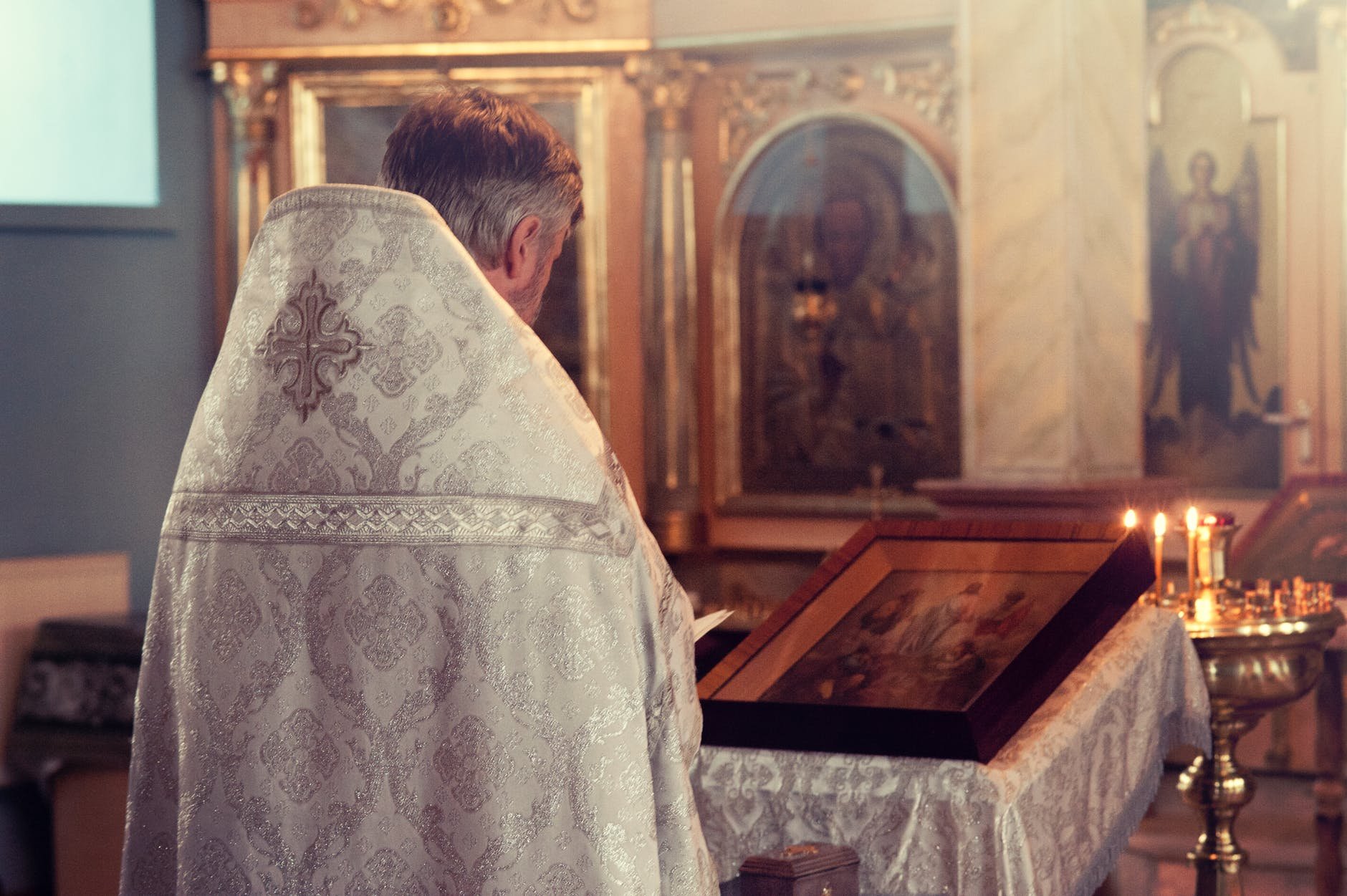
This post is part of “Ecclesia Anglicana,” a series devoted to all topics pertaining to Anglicanism. This contribution is by Trystan Owain Hughes, Tutor in Applied Theology at St Padarn’s, Cardiff, Wales, UK. Stay tuned for more!
In recent years, the identity and distinctivenessof priesthood has been questioned. In functional terms, it has long been recognizedthat priests require certain gifts and talents to minister effectively.Vocations advisors and directors of ordinands will suggest texts to candidates thatlist these functions. Such lists can seem daunting to those exploring a call toordination. In John Pritchard's The Lifeand Work of a Priest, one of the principal texts given to candidates exploringordained ministry in the Church of England and in the Church in Wales, sixteen distinctfunctional roles are presented, including “creative leader”, “faith coach”,“wounded companion”, and “spiritual explorer”. Traditionally, theologicalmodels of priesthood have grown out of a consideration of such functions. Bydoing so, such models often forged an ontology of priesthood.
During the twentieth century, in the UK atleast, the model growing in prominence was the priest as, primarily, a pastoralcare giver. In some ecclesial and theological circles, though, there was asense of uncertainty about this model, with the question posed how much itsfunctional roles actually differ from counseling and social work. By the time Iwent through the discernment process in the late 1990s, Anglican Churches hadmoved to regarding the principal role of a priest as an empowerer – a nurturerof the gifts of others. Before my own selection board, one priest even said tome: “as long as you slip in the word ‘enabler’ at least six times, you’ll sailthrough”! The concept of enabler certainly fits neatly into the contemporary emphasison collaboration and the flourishing of lay ministries. However, questionsshould still be asked about the primacy of this model. It is, after all, weakin terms of its sacramental rooting and it could lead to priests becoming glorifiedcreative administrators or, worse still, simply talent-spotters. As such, it isdifficult to forge an ontology of priesthood from this model alone.
Towards a New Model
With such uncertainties in theological andecclesial circles surrounding models of priesthood, it is little wonder that somany candidates struggle to articulate why they feel called to ordainedministry, despite the fact that most of them have read the classic texts ofdiscernment and vocation. The purpose and nature of priesthood certainly needsmore thought and clarity. In an issue of TheFurrow in 1995, the Roman Catholic Auxiliary Bishop of Los Angeles, RobertBarron suggests a model that is both culturally relevant and spirituallyuplifting, as well as firmly rooted in tradition and scripture. It is also amodel that could appeal to the plethora of churchpersonships and traditionsthat make up the Anglican Communion. It can be summed up as the priest as “abearer of mystery”.
Barron begins his exploration of this model bydescribing the fundamental loss of confidence within the priesthood in recentyears. He attributes this to an underdeveloped and negative theology of ministry.As a result, priests have lost confidence in themselves and their identity, leadingto a lack focus and orientation. While he is writing from his own particular ecclesialcontext, the loss of joy and hope, along with the increase of pessimism andcynicism, is reflective of some areas of our own denomination. Rooted in thatsame loss of priestly identity is the superior, and sometimes arrogant,attitude that is found in other areas of our Communion, which looks down condescendinglyon what is perceived as the lack of zeal and spiritual fervor of other clergy.
To counter the loss of priestly confidence andidentity, Barron therefore presents an image that he believes captures theunique and indispensable quality of a priest. The term “mystagogue” was used inthe early church with relation to bringing catechumens into the faith. Barronchooses this word to flesh out the priest's role in bringing the mystery ofGod's being to people's troubled lives. In other words, the priest’s role is tonotice, to announce, or to bring God's love, hope, peace, and compassion to individualsand communities. He roots this in Thomas Aquinas's analogia entis, whereby we come to know and experience God throughhis creation – we experience the otherly-other Being through the very tangiblebeing of this world.
In this model, the overriding call of priesthoodis to explore and grasp the mystery and then initiate others into it – opening eyesto God's presence, ears to God's call, hearts to God's love, and ways to God'swill. It is in this context that Theilard De Chardin described the priest as a “borderwalker”, bringing those on earth closer to the kingdom. They stand at theboundaries between the commonplace and the sacred, thus offering thepossibility of relationship with the divine. Priests are, therefore,interpreters of Manley-Hopkins's “grandeur of God”, Von Balthasar’s “patternsof grace”, and Philip Yancey's “rumours of another world”. They hold, to useWilliam Blake’s phrase, “infinity in the palm of their hand and eternityin an hour” and offer this to those to whom they are ministering.
Incarnation and Mystery
This model is profoundly incarnational in itsscope. Paul Tillich describes preaching as “holding up a picture of Christ”.The mystagogue's task is related to this image – it is the art of bringingJesus down to earth by displaying of the wonder, inspiration, and complexity ofhis icon. We do this through our words, but also through our lives. MeisterEckhart pointed out that the incarnation is worthless and pointless if the Wordis not also born in Christians. By stating that “the Word was made flesh” (John 1.14), the Gospel writeruses the inceptive aorist Greek tense which implies an action that has startedin the past but is continuing into the present. The phrase might rather betranslated as ‘the Word started to become flesh’. Thus, the Word continues tobecome flesh, even today, as Christians acknowledge that “I no longer live, butChrist lives in me” (Galatians 2:20). The priestly calling is rooted in this and, in this sense at least,all church traditions will be able to affirm the priest as “in persona Christi”. The model of the bearer of mystery therefore allows us model ourselves on theJesus of the gospels, bringing to our congregations as many questions as weprovide answers, telling as many stories as we affirm facts, and challenging asmuch as we give comfort.
Yet, more than this, this ministry is aparadoxical process of being Christ to people we already regard as Christ. CistercianCharles de Foucault regarded the recognition that all people are “the greatesttreasure of all, Jesus himself” as integral to the priesthood. Likewise, inlight of the radical incarnational call of Matthew 25, Alan Ecclestone went asfar as to challenge his fellow priests to consider where they bow at the end ofeach service. They should, he suggested, be bowing where they truly believeChrist is. Rather than bowing to the altar or the host, he urged them toconsider bowing to their congregations, where the real body of Christ residesand where the physical real presence is found. With the model of the priest asa bearer of mystery, then, we are compelled to see Christ in both ourselves andothers, whoever they may be and however different they are to us.
Sacraments and Mystery
This model of priesthood is also sacramental tothe core. On one hand, priests become witnesses to the wonder of thetraditional sacraments, leading others beyond physical matter to spiritual beautyand benefit – to see beyond bread and wine to Christ’s body and blood, beyondthe font to the transformational water of life, beyond the temporary joy of awedding day to a spiritual covenant, and so on. On the other hand, priestsbecome living sacraments themselves. They do this by, firstly, demonstrating,through words and deeds, God’s excessive and unreasonable love and compassion.To use Philip Yancey’s words, priests need to show people “what's so amazingabout grace”.
Secondly, though, priests become livingsacraments by bringing others into engagement with the beauty and wonder of thewhole gamut of human experience – theology, literature, film, music, nature,laughter, ecology, spirituality, art, architecture, poetry, and so on. G.K.Chesterton wrote that to see the world properly one must stand on one's head.The priest’s role is to stand on her or his head, beckoning others to do thesame and so to share this distinct, awe-inspiring, and life-giving vision ofthe world around. It is helping others to recognise the pearl of great price intheir seemingly ordinary everyday routines. Karl Rahner, himself often referred to as a‘mystic of everyday life’, pointed out the importance of leading Christians toGod’s active grace in creation, his self-communication in the midst of oureveryday lives. This is, to use the words of R.S. Thomas, “the turning aside like Mosesto the miracle of the lit bush, to a brightness that seemed as transitory asyour youth once, but is the eternity that awaits you”. Furthermore, there isalso a healing aspect to this call to, in the words of Alan Billings, “make Godpossible”. After all, love, compassion, wisdom, and beauty are not only mysterybearing, but also profoundly healing. Barron employs the ancient term doctor animarum (doctor of the soul) todevelop this aspect of priesthood and relates it directly to the priest’s pastoral calling.
To truly live out this model, though, prieststhemselves need time and space to connect with God and to engage with, andtheologically reflect on, wider culture. The pace of modern ordained ministry,much of which is either non-stipendiary or encompasses the demands of diocesanor provincial roles alongside parish work, rarely allows enough time for study,contemplation, and prayer, thus making St Paul's command to pray continually (1Thessalonians 5:16) seem a mere aspiration to most clergy.
Bearer of Mystery
With Anglican Churches embracing the healthyprocess of commissioning and licensing lay people for various roles, it isimperative that we ensure that the priestly role is not devalued. Embracing themodel of the bearer of mystery may help give further life and purpose to priestlyministry, as well as to our ordinands and ordination candidates. Priests shouldcertainly never be placed on a spiritual pedestal or elevated over and abovethe laity. No parts of the body should be elevated above the body itself (1Corinthians 12). However, there has to be something unique and distinctiveabout priestly ministry. The concept of priesthood of all believers (1 Peter2:5) reflects that all Christians share something of the role of Mystagogue,but to the priest this is more than a role or function. Through ordination, itbecomes a way of being.
While there is, then, no ideal model for which we can forge an ontology of priesthood, Barron’s work does provide us with a model that is both relevant to our times and rooted in the past. It also has the potential to inspire those who may feel the oars of priesthood have been lost on the shores of our rapidly changing culture. Furthermore, this model has the benefit of being accessible to all backgrounds and traditions. John Wesley once described himself as a preacher who set himself on fire and allowed people to watch him burn. This is at the root of this model of priesthood. The primary function of the priest, writes Barron, is not to preach, minister, or counsel. In fact, no function can define or confine priesthood. Rather, a priest is someone who is set on fire to the depths of their being by the mystery of God and then beckons others to draw near and be warmed or set alight by the flame.

Trystan Owain Hughes is Tutor of Applied Theology and Director of the MTh (Theology) at St Padarn’s Institute, Wales, UK and priest-in-charge of Christ Church, Roath Park, Cardiff, Wales. Previously he has been Chaplain at Cardiff University, Director of Ordinands at Llandaff Diocese, and Head of Theology at Trinity University College, Carmarthen. His theological training included extended placements in an asylum seekers deportation centre, an Oxford University college, and a large episcopal church in Washington DC. Trystan has attained an MTh from Oxford University and a PhD in church history from the University of Wales, Bangor. He is the author of Winds of Change: The Roman Catholic Church and Society in Wales 1916-1962 (UWP, 1999), Finding Hope and Meaning in Suffering (SPCK, 2010), The Compassion Quest (SPCK 2014), Real God in the Real World (BRF, 2014), and Living the Prayer (BRF, 2017). He has also been a regular voice on BBC Radio 4’s ‘Prayer for the Day’ and BBC Radio 2’s ‘Pause for Thought’ and was on the theological commission that assists the bench of Welsh Bishops for over 10 years. He is presently a member of the Church in Wales Evangelism Fund Committee, appointed as a cleric who has seen considerable growth in his parish in the past five years.