
Sermon: It-is-Well Hallelujah
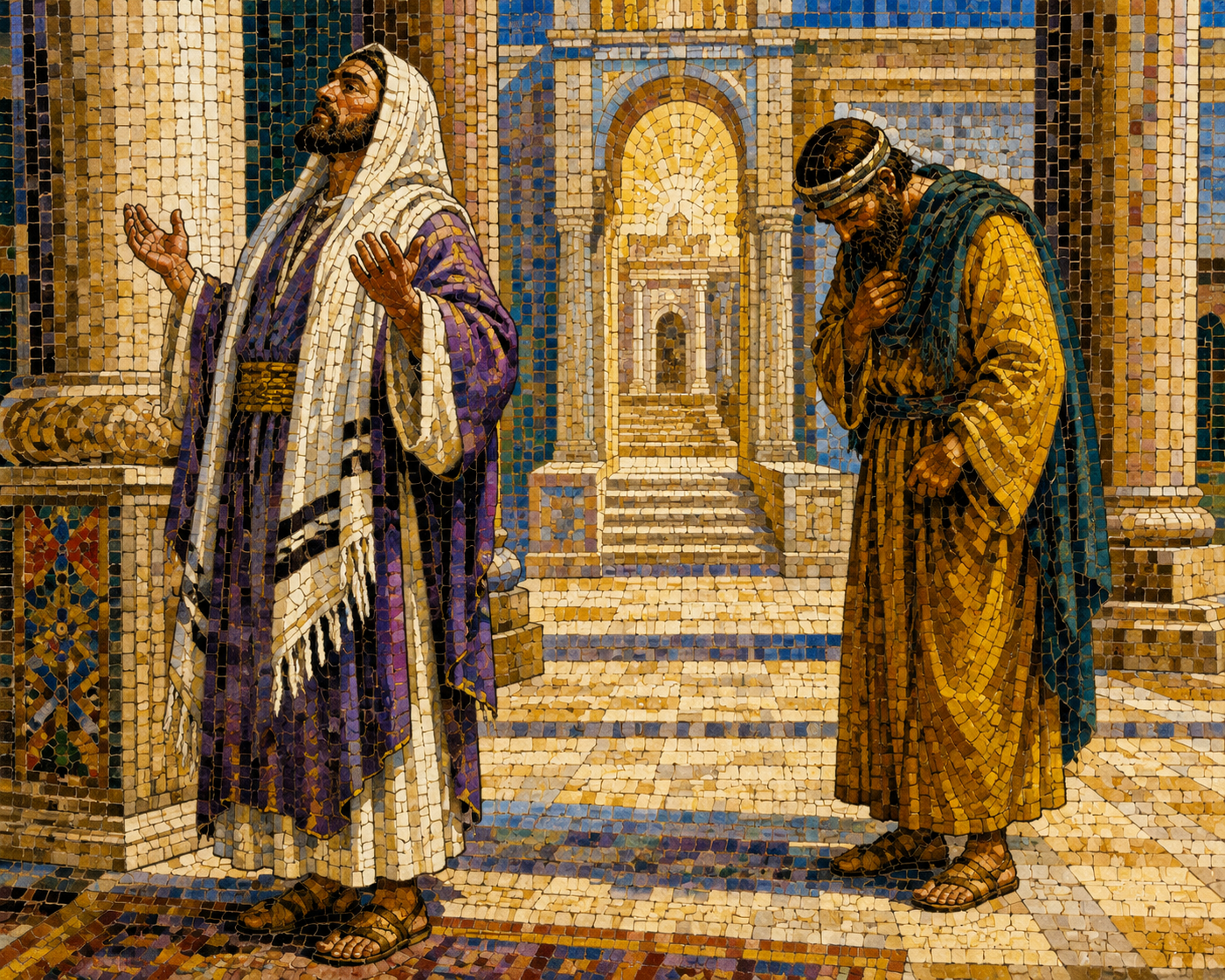
This sermon was preached in Augusta, GA on Sunday, October 26, 2025. The lectionary texts were for Proper 25A (Track 1) and were Joel 2:23-32; Psalm 65; 2 Timothy 4:6-8,16-18; Luke 18:9-14. Additionally, Jelly Roll has long been one of my musical and homiletical muses. This is the second time I have used his story of conversion and transformation as a sermon illustration.
It-is-Well Hallelujah
Jason DeFord was no model citizen.
With a rap sheet ‘a country mile long,’ he was arrested nearly 40 times for drug possession, intent to distribute, and armed robbery. He spent most of the decade overlapping his teens and early twenties behind bars, missing the birth of his daughter. He did not meet her until she was two.
Making no excuses, DeFord describes growing up in a Tennessee neighborhood where everyone either did drugs or sold drugs…the dealers were better off.
Many of you have never heard of Jason DeFord—a name hardly anyone recognizes. As a chubby kid who loved donuts, his mother gave him a loving nickname: Jelly Roll. And now you know who I mean.
A decade after prison, Jelly Roll broke into the country music scene with ‘Save Me,’ a song about addiction and a desperate plea for salvation.
Here are some of the lyrics…
Somebody save me / Me from myself
Something inside of me's broken / I hold onto anything that sets me free
I'm a lost cause / Baby, don't waste your time on me
I'm so damaged beyond repair / Life has shattered my hopes and my dreams1
That sounds like everyone I know.
Running from, escaping, or numbing something.
Collectively, we struggle with feelings of brokenness, loneliness, unworthiness, rejection, desperation, or anxiety. Some have experienced shattered hopes, shattered dreams, shattered hearts. We have (erroneously) assumed that we are “a lost cause, damaged beyond repair” because of what we’ve done or what’s been done to us.
And that’s the beauty of Jelly Roll.
He writes for “the losers, the outcasts and the sinners, the ain’t-never-been-no-winners”;2 “singing songs of the broken”3 and speaking on behalf of the “the depressed, the stressed, the anxious, and the addicted.”4
People all around us, including people in these very pews, are crying out to be saved from themselves.
From their mistakes.
From their fears.
From their pasts.
From their sins.
We see one such person in Jesus’ parable from Luke 18.
Context is always king. Jesus is still on the way to Jerusalem, on his way to the cross, on his way to die. We are only one chapter from Jerusalem! After a few more parables, a healing, and a quick pit stop in Jericho to dine with Zaccheus, Jesus will finally enter the holy city in triumph.
He has drawn a crowd while he is on the move: disciples, followers, would-be followers, the Jesus-adjacent, the nay-sayers, and a group of Pharisees and Scribes. The central theme of his message during this lengthy section has been the cost of discipleship. Specifically, what does it look like to truly and authentically follow Jesus?
This parable comes immediately on the heels of the parable we read last Sunday about the wicked judge and persistent widow. The connection between the two parables is overwhelming:
Both include persons of power being juxtaposed with persons of a lower station;
Both stories reveal the reversal of reality as the lesser person is thegoodexample;
And both stories include a prayerful, prayer-filled faith.
We know that parables are dangerous to behold because they can change our hearts by conviction and conversion. I want to offer a short pastoral word before we dive in: this parable isn’t about Pharisees and Tax Collectors and it isn’t about professions or career choices. When the message of the sermon becomes: I need to be more like the tax collector and than the Pharisee, we have missed Jesus’ point entirely.
Thankfully, Luke gives us the punchline before Jesus ever utters a word: this was told to some whotrusted in themselves that they were righteous and regarded others with contempt. From the jump, we are aware that Jesus is teaching this parable as a corrective rebuke to those who believe themselves to be in the right. This parable is neither innocent nor neutral; it is a story with teeth.
In her collection of sermons on the Old Testament, Fleming Rutledge writes, “Whenever we are sure that we are among the righteous, we immediately find ourselves among the arrogant.”5
Jesus never identifies who the self-righteous people were. Notice that the word Pharisee is not used in this description, nor is any adjective, title, or label other than the word “some.” The people against whom he is teaching are the people who are so self-reliant, so sure of their own self-righteousness that they have no need for God, no need for salvation outside of themselves, and certainly no use for other people because they believed themselves to be superior. These individuals clearly had heard of Anne Lamott or her statement that, “You can safely assume you've created God in your own image when it turns out that God hates all the same people you do,”6 for they held others in contempt.
Jesus is, therefore, telling a story which cuts across and through all societal boundaries, all external roles, and all man-made categories. He is condemning a disposition of the heart, a human habitus which runs rampant in people from every background, walk of life, socio-economic status, and profession.
And we get all of that from just the first verse.
In verse 10 we are told that two men went to the temple in Jerusalem to pray. The Temple was the meeting place between heaven and earth. The Temple was located on the Temple Mount. During the time of Herod, there was a large, outer courtyard surrounding the inner courtyards and the Temple proper.
This outer courtyard was known as the Gentiles’ Courtyard; the only place for Gentiles.
The first inner courtyard was the Women’s Courtyard for Jewish women.
Further in was the Israelites’ Courtyard for Jewish men.
Then, even closer to the Temple entrance, there was the Priest’s Courtyard. I’ll let you guess who could go there.
And then there was the Temple proper, particularly the Holy Place and then the Holy of Holies. Only the High Priest could enter the Holy of Holies.
The Temple was designed to separate and divide people into different groups.
Why does this matter??
Because we are told that a Pharisee and a Tax Collector were praying in the same space in the temple in Jerusalem. Their two jobs represented polar opposites on the workforce spectrum. The Pharisees were well-regarded and respected while tax collectors were disliked and looked down upon. Here in the Temple, however, in the presence of Almighty God rather than the court(yard) of popular opinion, the two men are equal. There was no distinction betwixt and between them because they both had access to the same part of the Temple.
Before God, neither status nor position separates them.
The Pharisee then begins to pray, “standing by himself.” To be a Pharisee was to constantly differentiate law from lawless, clean from unclean, righteous from unrighteous. His entire life was given over to making these classifications, so his prayer should not surprise us.
If we were casting DeFord into the parable from Luke’s story today, he wouldn’t be the Pharisee. He would be listed in the sentence: thank God I am not like the thieves, rogues, adulterers, this tax collector, or even that criminal Jason DeFord.
Armed robbery for weed is not exactly a virtue you see extolled in Scripture.
The issue with his prayer arises when he does not recount God’s mighty acts but rather places his trust in his own behavior. He should have given thanks to God for all that God had done for him but instead he highlights his own behavior:I fast twice a week; I give a tenth of all my income. He believed himself to be extra-holy, super-duper-righteous because of his own actions.
While the general population fasted once a week, he did it twice.
While the general population gave a tithe and offering to God, the Pharisee went so far as to tithing on his mint, dill, and cumin.
And there was no joy in such offering, not even a sense of duty, but rather a means of works-based righteousness. He has gone overboard, to the extreme, with the understanding that his actions are making him right before the Law and therefore God, that his actions are somehow saving him, that hedoesnot need God. Rather than giving thanks to God for God and what God has done, the Pharisee gives thanks to God for his own ability to be self-sufficient and self-reliant.
This is dangerous territory.
And I don’t want to move on too quickly.
Because it feels a little personal, too.
The Pharisee believed himself to be healthy and righteous apart from God. The Pharisee believed that by keeping the Law perfectly he can avoid divine punishment and achieve salvation on his own. This is not the posture of humility and repentance…
It’s a selfie on Instagram.
It’s a “look at me and my awesomeness.”
It’s virtue signaling and aura-farming at its worst.
And it happens in the Temple.
Before Almighty God.
When he should be on his knees.
The Church isn’t a MedSpa resort for the fit and healthy or rich and famous. It is a hospital for the sinsick and the spiritually dying; for sinners, ragamuffins, waywards, and wretches like you and me. The Pharisee’s posture says “Jesus, you don’t worry about me…but my neighbor/daughter/brother/coworker is really sinning it up out there…” The only answer for such spiritual arrogance,and we are all guilty of it, is to repent to God and seek his forgiveness.
The law cannot save us.
We cannot save us.
Only God can save us.
Then Jesus describes the tax collector’s prayer.
We are immediately shown a difference in the posture of the two individuals. The tax collector stood a far way off. This is subtly significant. The tax collector entered with a posture of reverence and repentance while the Pharisee entered with a posture of self-assurance.
Before he begins praying, we are told the tax collector would not even look up to heaven but began beating his breast. Both actions are signs of humility and lament. His physical posture displays and demonstrates the posture of his heart.
Then he prays, “God, be merciful to me, a sinner.” It is the functional equivalent of “Somebody save me!” With the gift of desperation and the knowledge that God can save, the tax collector hurls himself onto God’s amazing grace.
The gift of truly hitting rock bottom is that when you land on the rock you find out the rock is Christ!
He asks for God’s mercy because he knows that he has violated God’s law and deserves justice rather than mercy but he also knows that God is good and loving and merciful and so he asks anyway. And why does he ask? Because he is a sinner; he is theson of a sinner;and he needs a savior. He has no power in himself to help or save himself. Because he understands himself to be “beautifully broken.”7 Unlike others in the world, he doesn’t “only talk to God when he needs a favor.”8
He comes before God and he pours his heart out;
He pours his heart out in repentance and lament as an act of worship;
He pours his heart out because that is the only real response to the goodness and mercy of God.
And Jesus says that he will go home justified in his humility.
Beloved, we are sinking in our sins, we are sinking in our circumstances, we are sinking in ourselves, and we need to be saved from it all. We all need a savior but only God is mighty to save and all who call upon the name of Jesus will be saved.
Saved from ourselves, our fears, our hurts, our past, our sins.
I need to amend something from Jelly Roll: in Jesus Christyou are not a lost cause! You are not damaged beyond Jesus’ ability to repair! Yes, through our sins and wickedness, we are broken beyondour ownrepair, but Jesus is the one who makes all things news, reconciling us to himself, restoring us to the Father. The Good News is that Jesus “wastes his time on you” because you are beloved by God.
Like Jelly Roll, when we bellow, “Somebody save me!” or cry out, “Jesus, have mercy on me, a sinner!” like the tax collector, we find that Jesus is mighty to save.
Jelly Roll’s album Whitsitt Chapel was his first foray into publicly describing the arc of his redemption story. The album is full of references to his drug-and-alcohol-riddled past, to his lack of connection with God, and to finding a home in the church. He followed that album with Beautifully Broken, a deeper look into the process of redemption and restoration. Faith isn’t needed in this album, it is embodied and expressed. His arc came to full fruition when Brandon Lake asked him to collaborate on the song, Hard Fought Hallelujah. This drug-dealing-and-drug-using, rapsheet riddled, armed robbery former criminal is singing about the hard fought hallelujah which can only come through the work of Jesus.
That song led Jelly Roll to this year’s Dove Awards (aka the Christian Grammys) where he took the stage and turned it into a pulpit. He described how Matthew talked about “the least” in his biography of Jesus. How people gave water to the thirsty and visited people in prison. He said, “I realize I am standing here because people took time with the least.” Then he continued:
The world is hearing about Jesus like they haven’t in decades, right now. There is a revival happening [In the US] where you can’t go on a corner and not hear about Jesus right now. And while we are hearing about Jesus, I encourage you to put faith on your feet and feet on your faith and walk out of this building and go do for the least. They’ve heard of Jesus, now show them Jesus.
As Joel prophesied and promised, God is pouring his Spirit out in our midst.
People are coming to faith.
People are meeting Jesus in dreams.
People are spiritually curious and seeking answers and we have been given the only answer, the truest truth, the really real reality of the world.
It’s not about tax collectors and pharisees. We are all both of them all the time. And we cannot save ourselves! The good news we proclaim belongs to Jesus because:
Jesus is mighty to save;
Jesus takes our broken-beyond-repair-selves and makes something beautiful out of it;
Jesus has won the hard fought hallelujah.
And today, beloved, we will see it happen. Everything we’ve heard—from the Temple to Tennessee—comes down to this: God is still in the salvation business. In a few moments, salvation will splash before our eyes, grace made visible in water and word. A child will be sealed by grace, named in mercy, claimed as Christ’s own forever. The same mercy that found a tax collector praying in shame and a sinner singing for rescue now finds a child held in love—and finds us, too. Whether this is your first time crying, “Save me,” or you’re finding your way back to Jesus again, the invitation is the same: come, behold what love the Father has given us. Come, rejoice that every cry of “Save me” finds its answer in Jesus’ hard-fought, heart-felt, it-is-well hallelujah. Amen.
NOTES
"Save Me" by Jelly Roll
"Loses" by Post Malone, featuring Jelly Roll
Ibid
Fleming Rutledge, And God Spoke to Abraham.
Anne Lamott, Bird by Bird.
The title of Jelly Roll's 2024 album.
"Need a Favor," by Jelly Roll.