
Sermon: Tell and Show
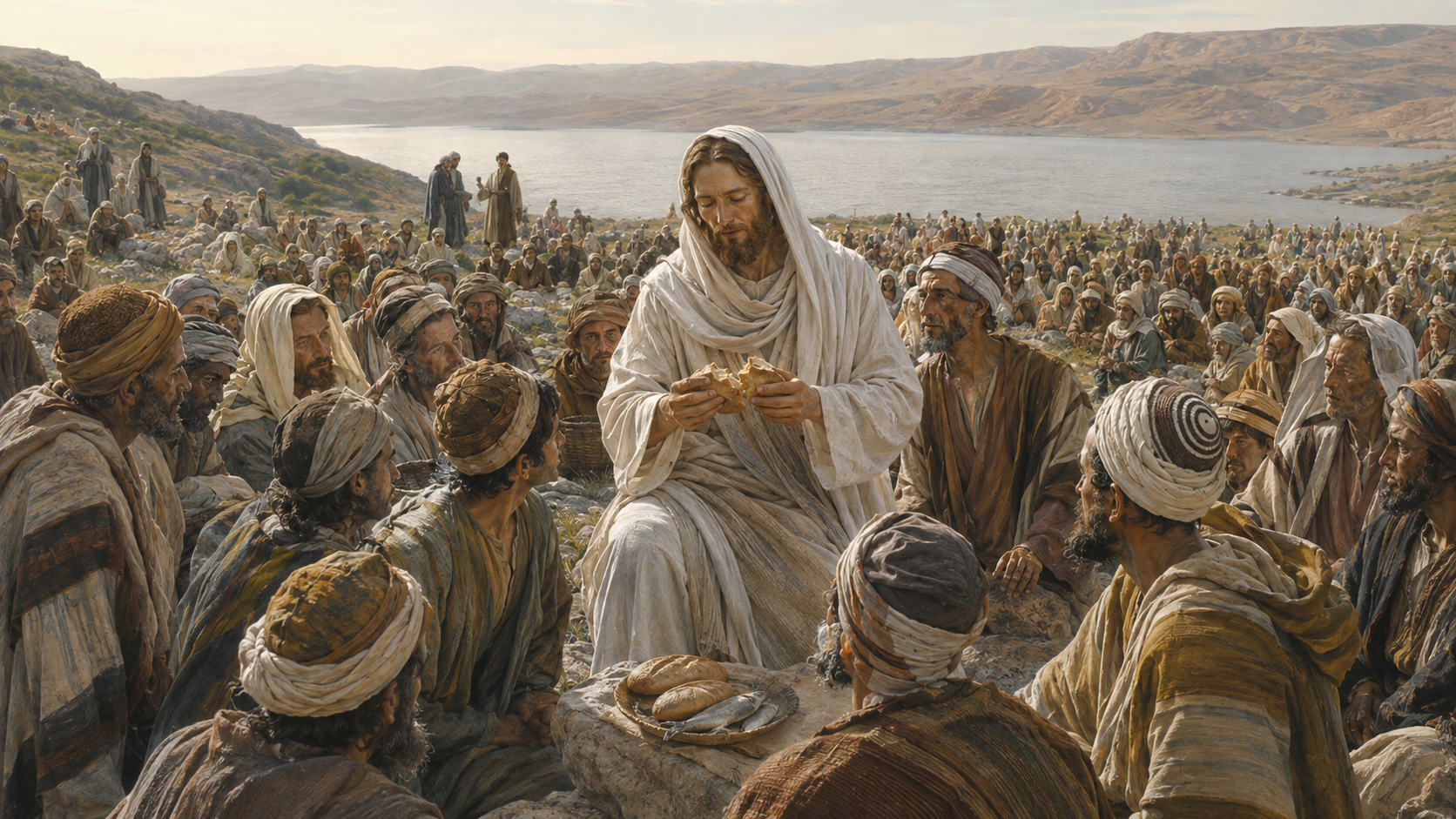
This sermon considers the feeding of the five thousand as an instance of God’s characteristic pattern of “telling and showing.” Jesus has already described the hidden, abundant economy of the kingdom through parables; now, in a deserted place among a hungry crowd, he makes that kingdom visible through compassion, healing, bread, and the gathered fragments. Read alongside Isaiah 55 and Psalm 145, the miracle reveals God’s provision as the tangible expression of his steadfast love and the fulfillment of his covenant promises. The Eucharistic pattern of taking, blessing, breaking, and giving then becomes not only a sign of Christ’s self-offering but also a pattern for Christian witness: having heard and seen the goodness of God in Christ, the Church is sent to tell that good news and embody it before a hungry world.
The Eucharistic Life
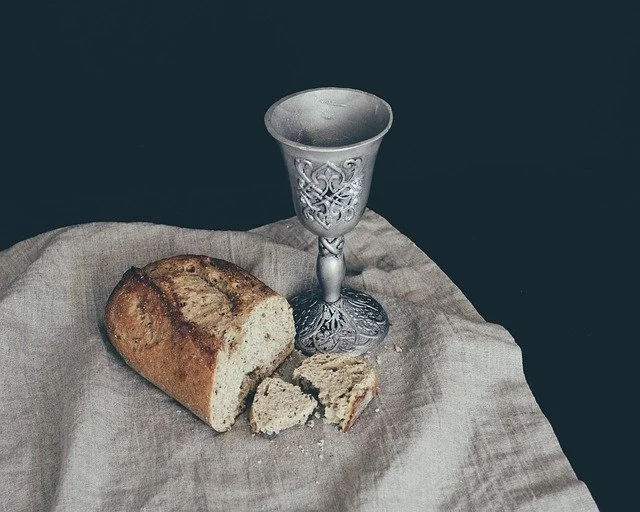
The Eucharistic life is not for the faint of heart. We go back to the Altar weekly to partake of Christ’s self-oblation that we might receive spiritual nourishment and encouragement for the pilgrimage.
The Eucharist and the Communion of the Saints
It is through the words and actions of our heartfelt praise and gratitude that we are connected to believers across all generations in a real and tangible sense. We have the hope that when the kingdom is fulfilled we will sit around the table in that heavenly country with brothers and sisters whom we have never met.
Learning to Tell Time Liturgically
Liturgical time is thick. It is different. It is new. And it is utterly real. Our experience with and encounter of the living God through the sacrament of sacraments is the pinnacle of the Church’s worship.
The Plurality of Christ's Presence in the Eucharist
A robust understanding of a dually climactic liturgy, of both Word and Sacrament, will lead to a deeper acknowledgment of Christ’s pluralistic presence in the Eucharistic ordo. Our Lord is present in, among, by, with, and for his creation and we should expect nothing less from the summit of our praise and worship.