
Anglican Mariology: A Modern Reformation
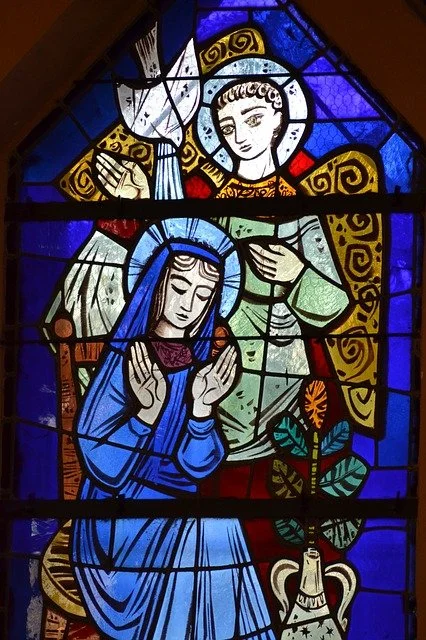
This post is part of "Ecclesia Anglicana," a series devoted to all topics pertaining to Anglicanism. Stay tuned for more!
Modern Protestants have always had a troublesome relationship with the Virgin Mary. Seeking not to stumble into the pitfalls of their separated Catholic brothers and sisters, Protestants have put a sort of ‘de-emphasis’ on Mary as to not be associated with anything which could be confused as ‘Catholic.’ However, the Anglican tradition consciously avoids the pitfalls of the nuanced hyperdulia of Catholicism and also the modern de-emphasis on Mary. Rather than seeing Mary as a theological ‘bump in the road’ to the Gospel narrative, Anglicanism emphasizes Mary’s role as the Theotokos: the God-bearer who carries the fullness of God’s grace in her womb and delivers him into the world. Anglicanism also pulls from the rich and beautiful Marian dogma of the Catholic Church, but centers Jesus, rather than Mary, in the place of sole honor.
Anglicanismremains as that branch of the Protestant tradition which holds fast to the richtraditions of the church and can be, both historically and liturgically, tiedto the Roman Catholic Church.[1]While other Protestant traditions emulate these characteristics, none do so likethe Anglican tradition. That being said, one can see the rich Mariology ofCatholicism present within Anglican liturgy. This is where Anglicanism receivesits popular slogan: “too Protestant to be Catholic and too Catholic to beProtestant.” Although a blanket statement which may be misleading at times,pertaining to Mariology it does fit well. Truly, Anglican Mariology is far tooCatholic for most Protestants to be comfortable with it, but also far tooProtestant for Catholics to agree.[2]
The first reason thatAnglicanism holds a high view of the Blessed Virgin, namely her role as the Theotokos,is because throughout the history of the Church, Mary has always been held inhigh regard. The ecumenical councils of the Church and the creeds which camefrom them are foundational to the Anglican tradition.[3]These councils and creeds are filled with deep and rich Mariology whichsupports an orthodox Christology. For example, the Nestorian controversy of theCouncil of Ephesus led to one of the greatest formations of early Marian dogma.According to Nestorius, Mary did not carry in her womb the Son of God, thesecond member of the Holy Trinity. Rather, she carried a mere human child; onewho would be united to the divinity of God – something apart from the humannessof Jesus. Nestorius argued that the Godhead joined with the human in the sameway a man enters a tent or puts on clothes. In short, Nestorius believed he could“hold the natures apart, but unite the worship.”[4]In response to this, Cyril of Alexandria, one of the most fierce, ruthless, andrespected Fathers of the Early Church, sought to resolve this heresy. In thecrucible of this theological fight for orthodoxy the language of Mary as the Theotokoswas affirmed.
Secondly, in the pastcentury there has been an even greater emphasis placed on Mary within theCatholic tradition, and a reactionary de-emphasis from the majority of theProtestant tradition(s). However, Anglicanism continues to look back to thetradition of the Reformation which did not react in opposition to Catholicism,but rather took what was good and beneficial and reformed it through aProtestant lens.
An example of this is foundin Martin Luther’s writings on Mary. Luther brings to light themes ofjustification and high-Christology without sacrificing genuine belief in Maryas the Theotokos and without losing a high sense of respect andveneration towards Mary, the Mother of God. In his reinterpretation of Gabriel’sdeclaration in Luke 1, “Hail Mary, full of Grace,” he ‘reforms’ the Catholicinterpretation that this is a declaration of Mary’s achievement of this status.In Luther’s understanding of the righteousness of God, he interprets Gabriel’sproclamation to be a gospel proclamation. “Blessed are you Mary, because youare full of the grace of God, which is Jesus Christ! He is within you, and heis coming!”[5]
A more recent example ofthis may be found in Protestant versus Catholic interpretations of Mary’s “Yes”to Gabriel’s proclamation. While the Catholic tradition understands thenarrative of Luke 1 to affirm the purity of Mary insomuch as she is then ableto bear Christ into the world, Anglicanism follows Luther’s interpretation andemphasizes her declaration of servanthood alongside her unworthiness. In thiswe model after Mary - we are unworthy to be used by God, yet we daily surrenderto him and in our unity with Christ we are given the power to be used by God.[6]
Furthermore, beyond variousinterpretations of Scripture, Anglicanism also continues this spirit ofreforming Catholic dogma spoken ex-cathedra.[7]For example, Catholics believe in the bodily assumption of Mary (declared byPope Pius XII, 1950).[8]According to Catholic theology, this singular participation in her Son'sresurrection anticipates the resurrection of other Christians. In Anglicanism,the emphasis is placed on Mary only insomuch as she goes before us as all othersaints, sharing in the divine glory of the eternal kingdom.[9]
Anotherexample may be found in the nuanced Catholic doctrine Hyperdulia. Douliais a Greek term which theologically describes honor paid to Christian saints. Latria,also a Greek term, designates supreme honor and is used to connotate worshipgiven to God, the Trinity. Between this general honor (doulia) and theexclusive worship given to God (latria) is hyperdoulia, which isveneration and honor given distinctly to the Blessed Virgin Mary because of herunique role in the mystery of redemption, her exceptional gifts of grace fromGod, and her pre-eminence among the saints. While this may remain within theboundaries of orthodoxy, Anglicanism remains true to the Protestant traditionin avoiding such nuanced terminology which often is lost at a local level.Instead, the Anglican tradition understands Mary as the model of humanityredeemed by Christ, and the principal type of the Church (this also is tieddeeply into Catholic Mariology). Any adoration or contemplation of Mary and theSaints is beneficial insomuch as it is an expression of the unity of the wholefamily of God in Heaven and on earth, a unity rooted ultimately in thebeliever’s unity with Christ.[10]
Inshort, Anglican Mariology is rooted in a continued ressourcement and reformingof Catholic doctrine. Further, it is an embrace of the unique position theAnglican tradition holds within Protestantism. It continually seeks to avoidthe pitfalls of Catholic dogma and of modern Protestantism in order to stand asa bridge between these traditions. Deeply rooted in the traditions and historyof the early church, Anglicanism calls believers to look back and remember thesaints before, to stand in our moment now and continue to redeem and reformthat which is around us, and lastly to look forward to the return of Christ inthe fullness of his glory.

Amar Peterman is Associate Director of Neighborly Faith andcurrently studies at Princeton Theological Seminary. He completed his BA inTheology at Moody Bible Institute where he was also President of the StudentTheological Society and Teaching Assistant to Dr. Ashish Varma.
[1] MarkChapman, Anglicanism: A Very Short Introduction (Oxford: OxfordUniversity Press, 2006).
[2] Formore on the boundaries of communion for the Anglican Church, see The ChicagoLambeth Quadrilateral
[3] Editor’s Note: hence the name of this very series, “EcclesiaAnglicana.” The Church of England was born from the church in England.
[4] Foran expanded narrative, see Bryan Litfin, Getting to Know the Church Fathers:An Evangelical Introduction (Grand Rapids: Brazos Press, 2007).
[5] BridgetHeal, The Cult of the Virgin Mary in EarlyModern Germany: Protestant and Catholic Piety, 1500–1648 (Cambridge: Cambridge University Press, 2007).
[6] Seethe Feast of Saint Mary the Virgin in the Book of Common Prayer (August15)
[7] Literallytranslated to: “from the chair.” This is in reference to the chair of SaintPeter which, according to the Catholic Tradition, represents the line ofapostolic succession which the Pope is a part of. That which is spoken “fromthe chair” is a declaration made by the Pope through his apostolic authority.
[8] Forthe full declaration, see http://w2.vatican.va/content/pius-xii/en/apost_constitutions/documents/hf_p-xii_apc_19501101_munificentissimus-deus.html
[9] SeeThe Book of Common Prayer, p. 192, 391.
[10] TheAnglican Service Book, http://justus.anglican.org/resources/bcp/Anglican_Service_Book/addl_devotions2.html#angelus